
Hype to Consequence of AI
The shift in Australian Higher Education

The Shift from Hype to Consequence
Artificial Intelligence is no longer a speculative horizon technology for higher education. It is already reshaping how universities operate, how students learn and how institutions design teaching, assessment and governance.
For Australian universities, this moment represents more than adopting new digital tools. It requires deliberate strategic choices that balance innovation with governance, speed with caution and opportunity with responsibility.
Institutions that act thoughtfully can strengthen service delivery, pedagogy, research capability and institutional governance. Those that hesitate risk falling behind in a global environment where universities are competing for talent, reputation and relevance.
The AI Inflection Point in Higher Education
Across the global higher education sector, AI adoption has accelerated rapidly.

86%
Global Student Usage
Students are already incorporating generative AI into everyday academic practice, using it for summarisation, concept clarification and drafting support.

92%
UK Adoption Rate
At the institutional level, universities are now moving beyond isolated experimentation and toward coordinated responses involving governance, academic policy and capability development.

66%
Institutional Response
Regulators are also responding. In Australia, TEQSA’s June 2024 request for information required all providers to submit institutional AI risk plans. This signals a broader shift in the sector: the conversation is moving from what AI can do to what AI means for academic integrity, capability and educational purpose.
Four Domains of Impact

1. Learning and Student Practice
Students are widely using generative AI to support their study practices, particularly for summarisation, explanation and conceptual clarification.
2. Teaching and Curriculum Design
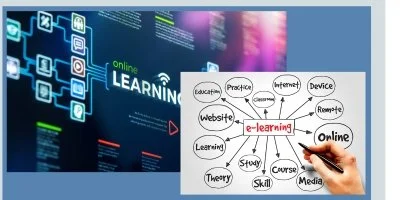
AI enables adaptive learning models, automated feedback and new forms of digital curriculum development. However, digital capability among staff remains uneven across institutions.
3. Assessment and Integrity
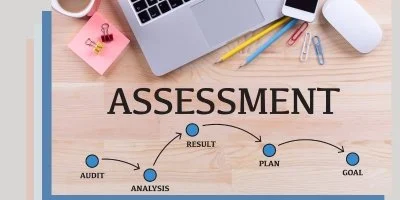
AI detection tools have proven unreliable, with high false positive rates. As a result, universities are increasingly redesigning assessment to emphasise authenticity, supervision and demonstration of understanding.

4. Governance and Institutional Capacity
AI governance is emerging as a strategic capability embedded within institutional ethics frameworks, academic quality systems and policy development.
Signals and Tensions Emerging
As universities integrate AI into teaching and operations, several tensions are becoming visible.
Integrity frameworks are under pressure as AI assisted work becomes difficult to distinguish from human authored content.
Equity issues are also emerging, as access to tools, guidance and institutional policies varies significantly between courses and institutions.
At the same time, many staff lack confidence in how AI should be incorporated into teaching practice.
These tensions highlight the need for leadership, governance and sector collaboration to ensure responsible adoption.
From Experimentation to Institutional Capability
Australian higher education is now entering a second phase of AI maturity.
Early experimentation with AI tools is being replaced by more structured approaches involving governance frameworks, assessment redesign and institutional strategy.
This shift represents the transition from hype to consequence.
Universities must now decide how AI aligns with their institutional mission, how it is governed and how it supports teaching, research and student success.
Download the Full Sector Analysis
This article summarises insights from the Bayshann sector research report.
From Hype to Consequence: AI in Australian Higher Education
Full report: 23 slides
Estimated reading time: ~15 minutes